

Brussels has four distinct seasons, but extremely hot or cold weather rarely continues for long periods. Summers are generally mild, winters are cold and damp, and rain is distributed relatively evenly throughout the year.
The main challenge is how quickly the weather can change. A clear morning may be followed by light afternoon rain, while cooler winds can arrive after the rain stops.
If you pack only according to the expected temperature, you may feel colder than anticipated or become uncomfortable because of wet clothing and shoes. The historic center also has many cobblestone streets, which can become slippery after rain.
This Brussels weather by month guide covers seasonal conditions, monthly temperatures, the best time to visit Brussels, recommended clothing, and practical packing advice for every type of traveler.
Understanding Brussels Weather
Brussels has a temperate oceanic climate influenced by the Atlantic Ocean. Winters are cold and damp, but prolonged periods of extreme cold are uncommon. Summers are usually mild or pleasantly warm.
Average daytime highs range from approximately 6°C in January to around 23°C in July. Even in summer, the weather is often characterized by cool mornings, comfortable afternoons, and relatively mild evenings rather than continuous Mediterranean-style heat.
One of the most important characteristics of Brussels weather is the absence of a clearly defined dry season. Travelers may experience rain in spring, summer, autumn, or winter.
Rain often arrives as a short shower or light drizzle rather than continuous heavy rainfall. This is why carrying a compact umbrella is useful even when the morning forecast appears mostly clear.
Wind and humidity also affect how the weather feels. Winter temperatures may not appear extremely low, but cold wind combined with damp conditions can make outdoor sightseeing feel considerably colder.
Brussels Monthly Weather at a Glance
| Month | Average High | Average Low | Typical Conditions | Recommended Clothing |
|---|---|---|---|---|
| January | About 6°C | About 1°C | Cold, cloudy, with possible rain or snow | Waterproof coat, knitwear, gloves |
| February | About 7°C | About 1°C | Cold with occasional wind | Winter coat, scarf, warm layers |
| March | About 11°C | About 3°C | Beginning of spring but still chilly | Knitwear, waterproof jacket |
| April | About 14°C | About 5°C | Changeable weather and showers | Long sleeves, light rain jacket |
| May | About 18°C | About 9°C | Mild weather and longer days | Shirt, cardigan, light jacket |
| June | About 21°C | About 12°C | Early summer with occasional rain | T-shirt, thin trousers, light jacket |
| July | About 23°C | About 14°C | Warmest month with possible showers | Summer clothing, thin outer layer |
| August | About 22°C | About 14°C | Warm with occasional rain | T-shirt, waterproof jacket |
| September | About 19°C | About 12°C | Mild and comfortable for walking | Long sleeves, light jacket |
| October | About 15°C | About 9°C | Cooler with more cloudy periods | Knitwear, waterproof jacket |
| November | About 10°C | About 5°C | Chilly with limited daylight | Coat, knitwear, scarf |
| December | About 7°C | About 2°C | Cold, damp, and short days | Winter coat, waterproof shoes |
These figures are approximate long-term averages rather than guaranteed forecasts. Actual conditions may be warmer, colder, wetter, or windier during your trip.
Check the local forecast 7 to 10 days before departure, then check it again immediately before traveling. Hourly forecasts are particularly helpful when planning walking tours and outdoor attractions.
Brussels Weather in January
January is one of the coldest months in Brussels. The average daytime high is approximately 6°C, while nighttime and early morning temperatures are close to 1°C.
Daytime temperatures may remain above freezing, but the combination of humidity, wind, and limited sunshine can make the air feel colder. Rain, sleet, or light snow is possible.
Freezing conditions may occasionally create ice on pavements, stairs, and cobblestone streets. Travelers should be especially careful when walking early in the morning or after sunset.
Pack a winter coat, warm knitwear, long trousers, and thick socks. A water-resistant or waterproof insulated coat is often more practical than a standard wool coat because it protects against both cold wind and rain.
Gloves, a scarf, and a warm hat can make long periods outdoors more comfortable. Shoes should provide both warmth and reliable traction on wet surfaces.
Daylight is limited in January. Schedule outdoor landmarks and neighborhood walks during the brighter part of the day, then visit museums, galleries, cafés, or other indoor attractions later in the afternoon.
January may appeal to travelers who prefer fewer crowds. When selecting accommodation, prioritize access to public transportation and a convenient location to reduce unnecessary walking in cold or wet weather.
Brussels Weather in February
February remains cold, with an average daytime high of approximately 7°C and an average low close to 1°C.
The days begin to become slightly longer, but cold wind and damp conditions can still lower the perceived temperature. Rain remains possible, and wet surfaces may become slippery when temperatures fall.
Wear warm knitwear, long trousers, and a waterproof winter coat. Travelers who are sensitive to cold may benefit from a lightweight thermal base layer underneath regular clothing.
A scarf, gloves, warm socks, and comfortable waterproof shoes are useful for full days of sightseeing.
February can be suitable for travelers interested in museums, food, architecture, and other city experiences that do not depend entirely on good weather.
Accommodation demand may be lower than during spring and summer, but prices depend on weekdays, weekends, conferences, school holidays, and major events. Compare the total cost and cancellation terms instead of assuming every winter date will be inexpensive.
Brussels Weather in March
March marks the beginning of spring, but conditions can still feel wintry. Average daytime highs reach approximately 11°C, while nighttime lows remain close to 3°C.
Mild and sunny afternoons can alternate with cold, cloudy, or windy days. Travelers may need a relatively warm outer layer in the morning but feel comfortable removing it during a brighter afternoon.
Layering is the most practical approach. Wear a long-sleeved top underneath a sweater or cardigan, then add a lightweight waterproof jacket.
A thin scarf and light gloves may still be useful during early March, particularly for morning walks and late evening activities.
Avoid relying on a single heavy coat. Several lighter layers are easier to adjust when temperatures change during the day or when moving between heated indoor spaces and chilly streets.
March can be considered by travelers seeking fewer crowds than in late spring. However, outdoor plans should remain flexible because the weather may change quickly.
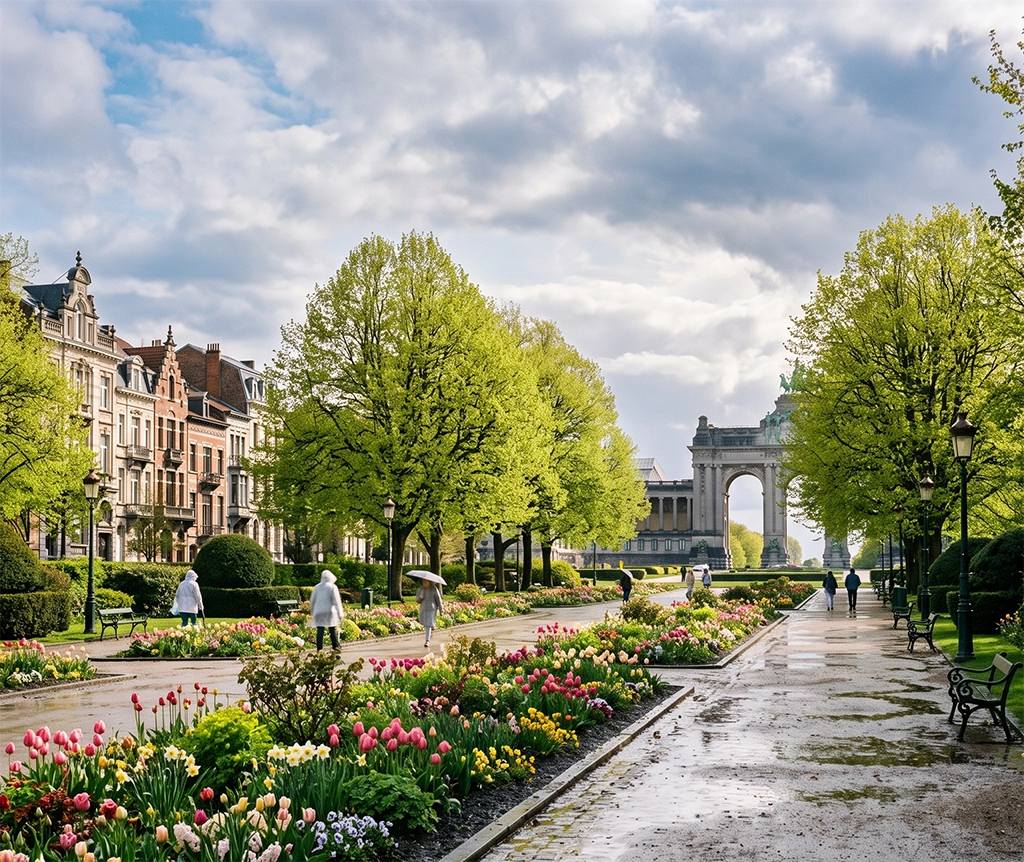
Brussels Weather in April
April has an average daytime high of approximately 14°C and an average low near 5°C. Spring becomes more noticeable, but the weather remains highly changeable.
Sunshine may be followed by increasing clouds and a short rain shower. When rain and wind arrive together, the weather can feel colder than the recorded temperature suggests.
Pack thin knitwear, long-sleeved tops, and a lightweight waterproof jacket. Select an outer layer that is easy to carry when the sun comes out.
A compact umbrella and water-resistant walking shoes are valuable additions to an April packing list. A waterproof pouch for a wet umbrella can also be convenient when entering museums, cafés, or shops.
Morning and evening temperatures may remain cool, so travelers should not pack only for the mildest afternoon conditions.
April can be attractive for sightseeing before the busiest summer period, but outdoor activities should be combined with flexible indoor alternatives.
Brussels Weather in May
May is one of the best months to visit Brussels. The average daytime high is approximately 18°C, with nighttime temperatures close to 9°C.
The days are longer, parks become greener, and conditions are generally comfortable for walking. Travelers can combine city sightseeing with day trips more easily than during the short winter days.
A shirt or thin long-sleeved top may be sufficient during a mild afternoon. However, mornings and evenings can still feel cool, so bring a cardigan or lightweight jacket.
Travelers packing short-sleeved tops should still carry an outer layer. Rain remains possible because Brussels does not have a reliably dry spring season.
A compact umbrella, light rain jacket, and comfortable water-resistant shoes remain useful. May provides a good balance of mild weather, longer daylight, and manageable temperatures for first-time visitors.
Accommodation demand can begin to rise during this period. If location is important, compare centrally located hotels with flexible cancellation conditions before prices increase.
Brussels Weather in June
June has an average high of approximately 21°C and an average low near 12°C. Long daylight hours make it one of the most convenient months for sightseeing.
On a bright day, a T-shirt may be comfortable during the afternoon. If clouds or rain arrive, however, the temperature can quickly feel cooler.
Pack short-sleeved tops, lightweight trousers, and a thin waterproof jacket. A light cardigan or overshirt is useful for evening meals, outdoor terraces, and late returns to your accommodation.
Rain may occur even when the daily forecast looks relatively favorable, so carrying a compact umbrella remains sensible.
June is suitable for visitors who want to explore parks, squares, markets, and outdoor areas without the colder conditions of early spring.
Travel demand begins to increase as summer approaches. Compare hotel location, air conditioning, breakfast, cancellation conditions, and the final price rather than selecting accommodation based only on the initial room rate.

Brussels Weather in July
July is usually the warmest month in Brussels. The average daytime high is approximately 23°C, while the average low is around 14°C.
Pleasant weather makes July suitable for visiting parks, historic squares, outdoor terraces, and neighborhoods on foot. Long daylight hours also make it easier to arrange activities from morning until evening.
Pack T-shirts, thin trousers, shorts, or lightweight dresses. Add a cardigan, overshirt, or thin jacket for cooler evenings.
Summer rain is still possible. Carry a compact umbrella or light waterproof jacket, especially when planning a full day away from your accommodation.
Although average temperatures are mild, short periods of much hotter weather can occur. Some older buildings and smaller hotels may not have air conditioning.
Check whether the room has air conditioning before booking, especially if it is located on an upper floor or receives strong afternoon sunlight. A portable fan should not be assumed to provide the same comfort as built-in air conditioning during hot weather.
July is a popular travel period, so well-located accommodation and popular tour times may become limited. Reserve essential activities early, but select flexible terms for weather-sensitive plans.
Brussels Weather in August
August remains warm, with an average high of approximately 22°C and an average low close to 14°C.
During clear periods, summer clothing is suitable. However, cloudy weather, rain, and cooler evenings can make short sleeves alone feel insufficient.
Pack T-shirts, lightweight trousers, and a thin waterproof jacket. A cardigan or long-sleeved overshirt is useful for early mornings and evenings.
For warmer periods, breathable clothing, sunscreen, sunglasses, and a reusable water bottle are recommended. Air conditioning should be checked when booking accommodation because it is not universal in older European properties.
August is part of the main European holiday season. Popular hotels, attractions, and guided tours may have limited availability.
Book accommodation and essential tours once your itinerary is confirmed. For outdoor activities, review cancellation and rescheduling conditions in case of rain or unusually hot weather.
Brussels Weather in September
September is one of the most comfortable months for visiting Brussels. The average daytime high is approximately 19°C, while the average low is around 12°C.
Early September can still feel like late summer. Conditions gradually become cooler as the month progresses, and autumn weather is more noticeable toward the end.
Clouds and rain can reduce the perceived temperature. Pack a thin long-sleeved top or T-shirt underneath a cardigan and a lightweight waterproof jacket.
Travelers visiting in late September may need a warmer sweater, particularly for evening activities.
September offers a favorable balance of comfortable walking temperatures, manageable heat, and fewer peak-summer conditions. It is particularly suitable for first-time visitors who want to spend significant time exploring the city on foot.
Rain remains possible, so good weather should not be assumed throughout the entire trip.
Brussels Weather in October
October has an average daytime high of approximately 15°C and an average low close to 9°C.
Autumn becomes well established, with cooler days, more cloudy periods, and shorter daylight hours. A bright afternoon can still feel pleasant, but temperatures fall more quickly after sunset.
Wear a long-sleeved top, sweater, and waterproof jacket. Travelers who feel the cold easily may also appreciate a thin scarf.
Rain and fallen leaves can make pavements slippery. Comfortable walking shoes with reliable traction are preferable to smooth-soled formal shoes.
Build outdoor activities around the brightest part of the day and reserve museums, shops, food experiences, or indoor attractions for late afternoon.
October can be suitable for travelers who prefer cooler weather and fewer peak-summer crowds. However, clothing should be flexible enough to handle mild sunshine, cold wind, and rain on the same day.
Brussels Weather in November
November has an average daytime high of around 10°C and an average low near 5°C.
Days become shorter, and cloudy weather, cold wind, and damp conditions are increasingly common. Early mornings and evenings may feel similar to winter.
Pack warm knitwear, long trousers, a water-resistant coat, and a scarf. A medium-weight coat may be sufficient during milder periods, but warmth and rain protection should both be considered.
Waterproof shoes are particularly useful because wet feet can make an otherwise manageable sightseeing day uncomfortable.
Schedule outdoor sightseeing during daylight hours. Museums, galleries, chocolate experiences, shopping, and indoor food activities are good options later in the day.
When booking accommodation, a central location or convenient public transportation access can reduce time spent walking in cold rain.
Brussels Weather in December
December is cold, damp, and dark compared with the rest of the year. The average daytime high is approximately 7°C, while the average low is near 2°C.
Rain, sleet, or occasional light snow may occur. Wind can make the air feel significantly colder than the temperature shown in the forecast.
Pack a winter coat, warm sweater, long trousers, scarf, gloves, thick socks, and waterproof footwear.
A coat offering both insulation and rain protection is more useful than an outer layer designed only for dry cold weather.
December can be attractive for travelers who enjoy seasonal lights, festive city atmosphere, winter food, and indoor cultural attractions. However, spending long periods outdoors may become uncomfortable.
Combine outdoor sightseeing with regular indoor breaks. Choose accommodation by comparing public transportation, walking distance, breakfast availability, and flexible cancellation terms.
Demand may increase around Christmas and New Year, so winter should not automatically be assumed to be a low-cost period.
Best Time to Visit Brussels
The best time to visit Brussels depends on your preferred weather, activities, budget, and tolerance for rain or cold.
Best Time for First-Time Visitors
May, June, and September are among the most convenient months for first-time visitors.
Temperatures are generally mild, daylight hours are longer than in winter, and walking around the historic center is more comfortable.
May and September provide a particularly useful balance between seasonal weather and peak-summer demand. However, rain remains possible during all three months.
Best Time for Outdoor Sightseeing
June through August offers the warmest average conditions and the longest days.
These months are suitable for parks, historic squares, outdoor dining, neighborhood walks, and day trips.
Summer does not guarantee dry weather. Bring a compact umbrella and lightweight outer layer. Check for air conditioning when booking accommodation because short periods of hot weather can occur.
Best Time for Mild Weather and Fewer Peak-Summer Conditions
May and September are strong options for travelers who want comfortable walking temperatures without relying on the warmest part of summer.
May offers spring greenery and increasingly long days. September can provide mild afternoons and a quieter atmosphere after the main summer holiday period.
Exact crowd levels and accommodation prices depend on weekdays, weekends, institutional events, conventions, holidays, and booking lead time.
Best Time for Winter Atmosphere
December is suitable for travelers interested in festive streets, seasonal events, winter food, and indoor cultural attractions.
The main disadvantages are limited daylight, damp cold, and frequent cloudy conditions. A flexible itinerary with regular indoor breaks is essential.
Best Time for Budget-Conscious Travelers
January and February may offer competitive hotel or flight prices on selected dates.
However, rates should always be compared using the exact travel dates. Business events, school holidays, weekends, and local demand can raise prices even during winter.
Travelers choosing these months should prioritize museums, food, architecture, and indoor experiences rather than building the entire itinerary around parks and long outdoor walks.
What to Pack for Brussels
Brussels requires more weather flexibility than destinations with a clearly defined dry season.
Recommended items include:
- Compact umbrella
- Lightweight waterproof jacket
- T-shirts and thin long-sleeved tops for layering
- Cardigan or sweater
- Comfortable walking shoes with good traction
- Water-resistant or waterproof footwear
- Winter coat from November through February
- Scarf and gloves for winter
- Sunscreen and sunglasses for spring and summer
- Waterproof pouch for a wet umbrella
- Small zippered crossbody bag
- Portable power bank
- Reusable water bottle
- Personal medication
Layering is more practical than relying on one very heavy garment. You can remove a sweater or jacket inside heated buildings and add a waterproof layer when rain or wind arrives.
Avoid packing only smooth-soled formal shoes. Wet cobblestones, stairs, and older pavements may become slippery after rain.

Weather Conditions to Watch in Brussels
Rain Throughout the Year
Brussels does not have a clearly defined dry season. Short showers or drizzle may occur during any month.
Carry a compact umbrella or light waterproof jacket even when the forecast shows only a limited chance of rain.
A full-size umbrella can be inconvenient on crowded streets or in stronger wind. A rain-resistant jacket often provides more practical protection while walking.
Wet Cobblestones and Steps
Historic streets and stone steps may become slippery when wet.
Choose walking shoes or trainers with reliable traction. Be particularly careful on slopes, tram tracks, station entrances, and polished stone surfaces.
Damp Winter Cold
Winter temperatures are not always extremely low, but wind and moisture can make the weather feel colder.
Use a layered system consisting of a base layer, sweater, and waterproof outer coat. Protecting the neck and hands with a scarf and gloves can improve comfort considerably.
Short Winter Days
Daylight is limited from late autumn through winter. Leaving major outdoor landmarks until late afternoon can reduce the quality of sightseeing and photography.
Visit outdoor attractions during the brightest hours and move indoor activities to the end of the day.
Temporary Summer Heat
Brussels summers are usually mild, but short hot periods can occur.
Check whether your hotel room has air conditioning. Drink water regularly and arrange indoor breaks during unusually warm afternoons.
Brussels Weather and Clothing Summary
When comparing Brussels weather by month, consider rainfall and wind as well as temperature.
May, June, and September generally offer mild weather and relatively convenient conditions for sightseeing. July and August provide the warmest temperatures and longest days, but travelers should still prepare for showers and occasional hot weather.
December through February is cold, damp, and dark. A waterproof coat, warm layers, gloves, a scarf, and shoes with good traction are useful during winter.
Brussels can be visited throughout the year if the itinerary matches the season. Museum, food, and cultural trips work well during colder months, while parks, walking tours, and day trips are more comfortable during late spring and summer.
Check the forecast 7 to 10 days before departure and again immediately before traveling. Place museums and indoor experiences during rainy periods and use clearer weather for parks, squares, and walking routes.
Preparing suitable clothing and flexible backup plans can reduce unnecessary purchases, uncomfortable walks, and weather-related changes during your Brussels trip.
FAQ
What is the best month to visit Brussels?
May, June, and September generally provide a good balance of mild temperatures and useful daylight for sightseeing. May and September are particularly suitable for travelers looking for comfortable walking conditions outside the coldest winter period.
What is the rainiest season in Brussels?
Rainfall is distributed throughout the year, so Brussels does not have a clearly defined dry season. Travelers should carry a compact umbrella or waterproof jacket regardless of the month.
Does it rain every day in Brussels?
It does not rain every day, but short showers and drizzle are possible throughout the year. The weather can change quickly, so hourly forecasts are often more useful than a single daily weather symbol.
What should I wear in Brussels?
Layered clothing is the most practical choice. Pack T-shirts or long-sleeved tops, a sweater or cardigan, and a waterproof outer layer. In winter, add a warm coat, scarf, gloves, and waterproof shoes.
Does Brussels get cold in winter?
Winter daytime temperatures are generally a few degrees above freezing, but wind and humidity can make the weather feel colder. Frost, sleet, and occasional snow are possible.
Is Brussels hot in summer?
Brussels summers are generally mild, with average daytime highs around 21°C to 23°C. Short periods of hotter weather can occur, so travelers should check whether their accommodation has air conditioning.
Do I need waterproof shoes in Brussels?
Fully waterproof shoes are not essential for every trip, but water-resistant walking shoes with good traction are highly recommended. Historic cobblestones and stone steps can become slippery after rain.
How many days should I spend in Brussels?
Two to three days is suitable for the main city attractions. Four or five days allows more time for museums, food experiences, and day trips while providing flexibility in case of rain.