

Riga, the capital of Latvia, changes dramatically with the seasons. Summer brings long daylight hours, green parks, and comfortable conditions for exploring the Old Town. Winter is cold and dark, but snow-covered streets, seasonal lights, and cozy indoor attractions give the city a completely different atmosphere.
When planning a trip, checking the average temperature alone is not enough. Riga is close to the Baltic Sea, so wind and humidity can make the weather feel considerably colder than the forecast suggests. Rain, snow, and freezing conditions can also affect walking conditions, especially on the cobblestone streets of Riga Old Town.
Spring and autumn weather can change several times during the same day. A clear morning may be followed by clouds, light rain, and chilly wind in the afternoon. Even in summer, evenings can feel cool enough to require an extra layer.
This guide explains Riga weather by month, including average daytime and nighttime temperatures, seasonal conditions, recommended clothing, and weather-related risks. It also covers the best time to visit Riga for sightseeing, summer activities, autumn scenery, Christmas travel, and lower-cost trips.
Understanding Riga’s Climate
Riga has four distinct seasons, but they do not always feel the same as the corresponding seasons in warmer parts of Europe.
Winters are long, cold, and often cloudy. Temperatures may remain below freezing during the day, while wind can lower the perceived temperature even further. Snow is possible, but winter does not always mean continuous snow cover. Rain, sleet, melting snow, and ice can occur during the same week.
Spring develops slowly. March can still feel like winter, while April and May bring longer days and gradually rising temperatures. Large differences between daytime and nighttime temperatures are common, so layered clothing is especially useful.
Summer, from June to August, is generally mild and pleasant. Average daytime temperatures are often around 20°C, although short periods of warmer weather can push temperatures close to or above 30°C. Rain showers remain possible throughout the season.
Autumn begins relatively gently in September, but temperatures can decrease quickly from late September onward. October and November are usually cooler, wetter, windier, and noticeably darker.
Riga Monthly Weather Comparison
The figures below represent typical temperature ranges for travel planning. Daily conditions can vary, so check the latest forecast shortly before departure.
| Month | Average Daytime Temperature | Average Nighttime Temperature | Rain or Snow Conditions | General Feel | Recommended Clothing | Weather to Watch |
|---|---|---|---|---|---|---|
| January | -2 to 1°C | -7 to -4°C | Snow, sleet, and freezing rain possible | Very cold, especially in the wind | Heavy coat, thermal layers, waterproof boots | Cold waves, ice, short daylight hours |
| February | -1 to 2°C | -7 to -4°C | Snow, melting snow, and repeated freezing | Similar to January | Down jacket, hat, gloves, scarf | Black ice, wet snow, strong wind |
| March | 3 to 6°C | -3 to 0°C | Rain and snow may alternate | Mild by day but wintry at night | Light down jacket, knitwear, waterproof shoes | Late snow, wet roads, large temperature changes |
| April | 9 to 12°C | 2 to 4°C | Brief rain showers possible | Mild in the sun, cool in the shade | Windproof jacket, long sleeves, light knitwear | Gusty wind, showers, sudden temperature drops |
| May | 15 to 18°C | 7 to 9°C | Generally pleasant with occasional rain | Warm by day and cool at night | Light jacket, shirt, long trousers | Large temperature range, sun exposure, pollen |
| June | 19 to 22°C | 11 to 13°C | Occasional rain and showers | Long days and cool evenings | T-shirt, light long-sleeved top, thin jacket | UV exposure, sudden rain, chilly evenings |
| July | 21 to 24°C | 14 to 16°C | Summer rain and thunderstorms possible | Usually warm, occasionally hot | Summer clothing and a light outer layer | Short heat waves, heavy showers |
| August | 20 to 23°C | 13 to 15°C | Rain can occur relatively frequently | Warm early in the month, cooler later | T-shirt, long-sleeved shirt, light rain jacket | Rain, temperature changes, cooler late August nights |
| September | 15 to 18°C | 8 to 11°C | Increasing cloud and rain | Mild in early September, chilly later | Knitwear, trench coat, long trousers | Cool wind, morning fog, slippery cobblestones |
| October | 9 to 11°C | 4 to 6°C | More cloudy and rainy days | Often feels colder than the temperature suggests | Warm knitwear, windproof rain jacket | Strong wind, persistent rain, shorter days |
| November | 3 to 6°C | -1 to 2°C | Sleet and early snow possible | Damp and cold | Coat or padded jacket, gloves, waterproof footwear | Ice, sleet, rapid temperature drops |
| December | -1 to 2°C | -5 to -2°C | Snow, rain, and sleet possible | Cold with very limited daylight | Insulated coat, thermal layers, waterproof boots | Ice, wind, early sunset |
Riga Weather in Winter
Riga Weather in January
January is usually one of the coldest months in Riga. Daytime temperatures commonly range from approximately -2°C to 1°C, while nighttime temperatures can drop to around -7°C. During a cold wave, temperatures may fall significantly below these averages.
Snowfall is possible, but travelers should not assume that the city will remain under permanent snow cover. Temperatures frequently move above and below freezing, creating a mixture of snow, sleet, rain, and wet pavement.
This freeze-and-thaw pattern can make Riga Old Town particularly slippery. Water and melting snow may freeze again after sunset, forming ice on sidewalks, stairs, and cobblestone streets.
Wear thermal underwear under a fleece or wool sweater, followed by a wind-resistant insulated coat. Waterproof boots with a slip-resistant sole are more useful than lightweight fashion shoes. A warm hat, scarf, and insulated gloves are essential for extended outdoor sightseeing.
The main weather risks in January are severe cold, strong wind, ice, and very short daylight hours. Plan outdoor sightseeing during the middle of the day and reserve museums, galleries, cafés, and indoor markets for the late afternoon.
Riga Weather in February
February remains cold, with average daytime temperatures of approximately -1°C to 2°C. Nights commonly fall between -7°C and -4°C. Daylight gradually increases toward the end of the month, but the weather still feels distinctly wintry.
Sunny skies do not necessarily mean warm conditions. Dry-looking streets can also be deceptive because a thin layer of transparent ice may form on the pavement.
Wet snow, slush, puddles, and frozen surfaces can appear together. Waterproof footwear with good traction is therefore particularly important.
A down jacket or insulated coat, thermal base layer, hat, scarf, and waterproof gloves are recommended. Avoid relying on regular fabric trainers because melting snow can quickly soak through them.
Black ice is the main weather hazard in February. Walk slowly on stairs, bridges, sloped streets, and polished cobblestones, especially early in the morning and after sunset.
Riga Weather in March
March is a transitional month when winter and spring conditions can appear within the same week. Daytime temperatures generally rise to around 3°C to 6°C, but nights may still fall below freezing.
Snow remains possible, particularly during the first half of the month. Later in March, rainfall becomes more common as daytime temperatures increase.
Sunny afternoons may feel relatively mild, but temperatures can fall quickly after sunset. Cloud cover and wind may also make an otherwise moderate day feel much colder.
Layer a sweater or fleece under a light down jacket or warm windproof coat. Long trousers and water-resistant walking shoes are appropriate. A compact umbrella can be useful, although a hooded rain jacket is often more practical during windy weather.
Late snow, large temperature differences, and refreezing water are the main issues to consider. Melting snow can make roads and paths muddy during the day and icy at night.
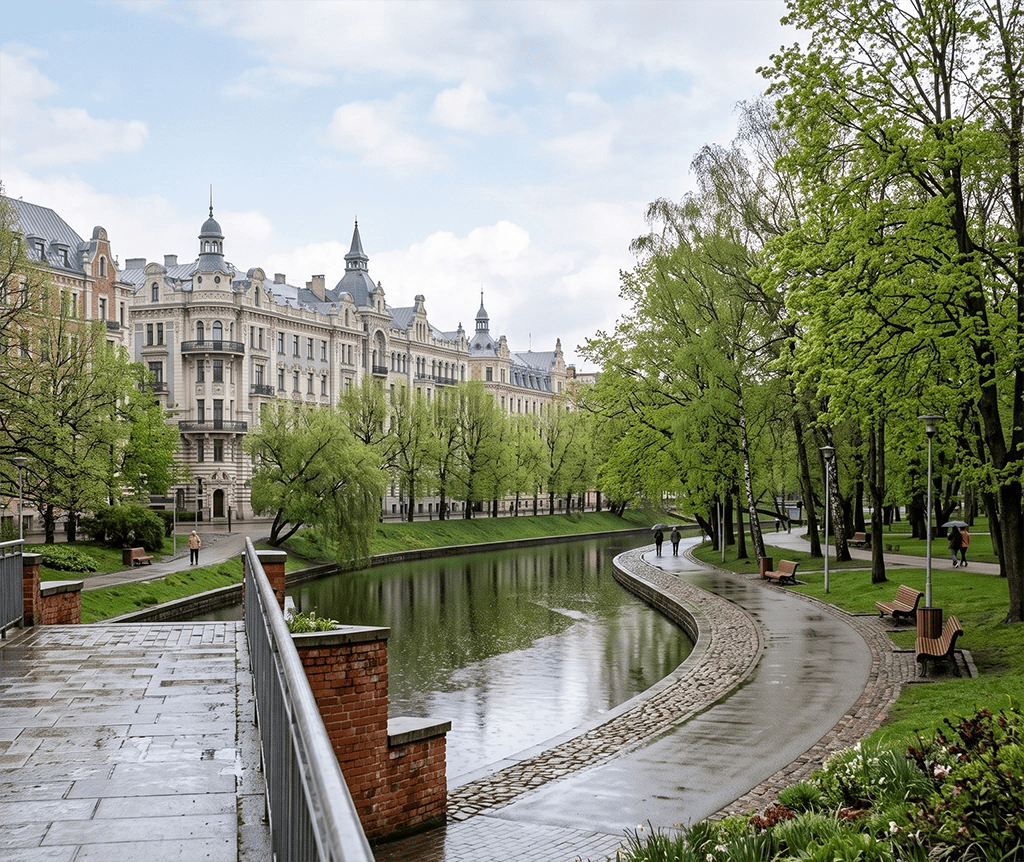
Riga Weather in Spring
Riga Weather in April
April brings noticeable signs of spring, but the weather can remain unpredictable. Average daytime temperatures are approximately 9°C to 12°C, while nighttime temperatures typically fall to 2°C to 4°C.
Sunshine can make the afternoon feel warm, especially in sheltered areas. However, shaded streets, the riverfront, and open squares can still feel chilly.
Brief rain showers and sudden gusts are common possibilities. The weather may change from clear to cloudy within a relatively short time.
Wear a long-sleeved shirt or light knitwear under a windproof jacket. Travelers who are sensitive to cold may want to carry a lightweight padded jacket.
Sudden rain and strong wind are the main weather conditions to watch. A compact, sturdy umbrella can help on calm days, but a hooded water-resistant jacket is more reliable when the wind is strong.
Riga Weather in May
May is one of the best months to visit Riga. Daytime temperatures generally range from 15°C to 18°C, although warmer days may exceed 20°C. Nights remain cool at approximately 7°C to 9°C.
Parks and canal areas become increasingly green, while longer daylight hours make it easier to explore Riga on foot. The weather is usually comfortable for city sightseeing, outdoor cafés, markets, and short excursions.
Conditions can still feel chilly when it is cloudy or rainy. Travelers arriving with only light summer clothing may find the evenings colder than expected.
Pack a long-sleeved shirt, thin sweater, lightweight jacket, and long trousers. Sunglasses and sunscreen are also useful for bright days.
Large temperature differences between midday and late evening are the main concern. Brief rainfall is also possible, and travelers with seasonal allergies may need to prepare for spring pollen.
Riga Weather in Summer
Riga Weather in June
June is an excellent month for visitors who want to take advantage of long daylight hours. Daytime temperatures are typically around 19°C to 22°C, while nighttime temperatures fall to approximately 11°C to 13°C.
The extended daylight makes June particularly suitable for combining Riga Old Town, the Central Market, local parks, the Daugava riverfront, and nearby destinations in one itinerary.
A T-shirt may be comfortable during a sunny afternoon, but a long-sleeved layer or lightweight jacket is usually needed in the evening. The temperature difference becomes more noticeable near the river and in exposed areas.
Pack short-sleeved tops, a thin shirt, lightweight trousers, and a compact jacket. Comfortable walking shoes with cushioning are important because many sightseeing routes include cobblestones.
Strong sunlight and sudden showers are the main conditions to watch. Use sunscreen even on partly cloudy days and carry a compact umbrella or light waterproof jacket for longer excursions.
Riga Weather in July
July is generally the warmest month in Riga. Average daytime temperatures are approximately 21°C to 24°C, while overnight temperatures usually remain between 14°C and 16°C.
Compared with many southern European destinations, Riga often feels pleasantly mild. However, short heat waves can raise daytime temperatures to around 30°C or higher.
Some historic hotels, apartments, and smaller guest rooms may have limited air-conditioning. Travelers who are sensitive to heat should check whether their accommodation provides air-conditioning or another effective cooling system before booking.
Wear breathable summer clothing and carry a light long-sleeved shirt or jacket for cooler evenings. Choose supportive trainers rather than shoes with very thin soles, as Riga Old Town involves extensive walking over uneven cobblestones.
The main weather concerns are temporary heat, heavy showers, and occasional thunderstorms. Even after a hot afternoon, the evening may become considerably cooler.
Riga Weather in August
Early August often feels similar to July, with typical daytime temperatures of 20°C to 23°C and nighttime temperatures of 13°C to 15°C.
The weather gradually changes during the second half of the month. Mornings become cooler, daylight shortens, and evenings begin to feel more autumnal.
Short-sleeved clothing is suitable for warm afternoons, but rain can cause temperatures to fall quickly. A light jacket is particularly useful for riverside walks, outdoor restaurants, and late evening activities.
Pack a T-shirt, long-sleeved shirt, comfortable trousers, and a lightweight waterproof jacket. Bring proper walking shoes rather than relying entirely on sandals.
Rain and the gradual late-August temperature drop are the main factors to consider. Travelers visiting near the end of the month should pack for early autumn as well as summer.

Riga Weather in Autumn
Riga Weather in September
September begins with relatively mild conditions, but temperatures decrease noticeably toward the end of the month. Average daytime temperatures range from 15°C to 18°C, while nighttime temperatures are usually between 8°C and 11°C.
Sunny afternoons may still feel pleasant, but cloudy and rainy days can be considerably colder. The canal, parks, riverfront, and open squares may feel chilly when the wind strengthens.
A thin sweater, long trousers, trench coat, or lightweight jacket is suitable. Water-resistant walking shoes are helpful after rain.
Morning fog, cool wind, wet leaves, and slippery cobblestones are the main conditions to watch. Take extra care when walking through the Old Town after rainfall.
Riga Weather in October
October is cooler, wetter, and darker. Daytime temperatures generally range from 9°C to 11°C, while nighttime temperatures fall to approximately 4°C to 6°C.
Autumn colors may still be visible in parks and nearby natural areas. However, wind and rain can cause leaves to fall quickly, so foliage conditions may change considerably over a short period.
Overcast conditions and strong wind often make the weather feel colder than the forecast indicates. Travelers should be prepared for rain during outdoor sightseeing.
Wear a warm sweater, long trousers, and a windproof, water-resistant jacket. A lightweight thermal base layer or compact padded jacket can be useful for travelers who feel the cold easily.
Persistent rain and strong wind are the main weather risks. An umbrella may become difficult to use during gusty conditions, making a hooded waterproof jacket the more practical option.
Riga Weather in November
November feels more like early winter than late autumn. Average daytime temperatures range from approximately 3°C to 6°C, while nighttime temperatures can fall between -1°C and 2°C.
Rain may change into sleet or early snow. Grey skies are common, and the shorter daylight hours can limit the time available for outdoor sightseeing.
Begin outdoor activities in the morning and schedule Riga Central Market, museums, galleries, restaurants, and cafés for the afternoon.
A warm coat or medium-weight padded jacket, knitwear, scarf, thin gloves, and waterproof shoes are recommended.
Sleet, rapid temperature drops, and nighttime ice are the main concerns. Rainwater left on the pavement during the day can freeze after dark.
Riga Weather in December
December marks the beginning of full winter conditions. Average daytime temperatures are approximately -1°C to 2°C, while nights commonly fall between -5°C and -2°C.
Because temperatures frequently stay close to freezing, precipitation may arrive as snow, rain, or sleet. Travelers should not assume there will be continuous snow throughout their visit.
December is attractive for seasonal lights and the city’s festive atmosphere, but daylight is very limited. Visit outdoor landmarks early and plan indoor activities for the period after sunset.
Wear a windproof and waterproof insulated coat over thermal underwear and a warm middle layer. Add winter trousers, thick socks, a hat, scarf, gloves, and waterproof boots.
Early sunset, ice, and wet winter conditions are the main weather concerns. If you plan to spend extended periods outdoors, particularly around seasonal markets and illuminated streets, foot and hand protection will make a significant difference.

Seasonal Weather Risks in Riga
Winter Ice and Wind
During winter, the perceived temperature can be more important than the number shown in the forecast. Damp wind can make temperatures around 0°C feel considerably colder.
Windproof and waterproof clothing is as important as insulation. Choose waterproof footwear with a textured, slip-resistant sole instead of smooth fashion boots.
Snow can melt during the day and refreeze after sunset. Pay particular attention on bridges, stairs, pedestrian crossings, and cobblestone streets.
Spring Temperature Changes
April and May can be warm during the afternoon but cold in the morning and evening. Layered clothing is the most practical approach.
A combination of a long-sleeved shirt, thin sweater, and windproof jacket allows you to adjust your clothing throughout the day.
Carry either a compact umbrella or a hooded jacket because brief showers can develop even when the morning begins with clear skies.
Summer Showers and Cool Evenings
Riga’s summer is usually mild, but cloudy weather and rain can cause a noticeable temperature drop. Riverfront locations and coastal excursions can also feel colder because of the wind.
Bring a thin long-sleeved shirt or lightweight jacket even if you are visiting in July or August. Comfortable water-resistant trainers are useful during periods of unsettled weather.
During short heat waves, check whether your accommodation has air-conditioning, particularly if you have booked an attic room or an apartment in an older building.
Autumn Rain and Slippery Streets
Rain and cool wind become more frequent from late September. Wet cobblestones and fallen leaves can be slippery, particularly in Riga Old Town and park areas.
Wear shoes with good grip and carry a water-resistant outer layer. If persistent rain is forecast, adjust your itinerary to include museums, galleries, Riga Central Market, churches, and cafés.
Best Time to Visit Riga
For most first-time visitors, the best time to visit Riga is from late May to early September. Temperatures are generally comfortable, daylight hours are long, and conditions are suitable for walking tours, parks, markets, riverfront sightseeing, and day trips.
June is one of the strongest choices for travelers who prioritize long days and mild temperatures. The extended daylight makes it easier to fit several attractions into one day without rushing.
July and early August are suitable for travelers who prefer the warmest weather. These months are also part of the main summer travel season, so popular flights, central hotels, and well-reviewed apartments may have more limited availability.
May and September are good alternatives for visitors who prefer cooler conditions and a calmer atmosphere. Layered clothing is necessary, but walking around the city can be more comfortable than during an unusually warm summer period.
December is worth considering for festive lights and a winter city break. However, travelers should plan for limited daylight and prepare for rain, sleet, ice, or snow rather than expecting guaranteed snowy scenery.
Best Time to Visit Riga by Travel Style
Best Time for a First Visit
Late May, June, and early September provide a useful balance of mild weather, relatively long days, and comfortable sightseeing conditions.
These periods work particularly well for visitors planning to spend significant time walking through Riga Old Town, the Art Nouveau district, local parks, and the riverfront.
Best Time for Long Summer Days
Visit between June and early August. Long daylight hours allow more flexibility for outdoor attractions, parks, riverside walks, open-air dining, and excursions outside the city.
June is especially appealing for travelers who want summer conditions without relying on the warmest part of the year.
Best Time for Autumn Scenery
Late September and early October can offer autumn colors in parks and surrounding areas. The exact timing varies depending on temperature, rainfall, and wind.
Include indoor alternatives in your itinerary because strong wind or persistent rain can shorten the period of peak autumn color.
Best Time for Christmas Travel
December is the most suitable month for festive winter experiences. Plan outdoor activities during the limited daylight hours and use the evening for illuminated streets, cultural performances, restaurants, and indoor attractions.
Bring proper winter footwear because freezing and melting conditions may create slippery streets.
Best Time for Lower Prices and Fewer Crowds
Late March, April, October, and November may feel quieter than the main summer season. Accommodation and flight availability can sometimes be more flexible, although exact prices depend on weekends, holidays, events, and booking dates.
The trade-off is less predictable weather. Waterproof clothing, flexible sightseeing plans, and a list of indoor attractions are important during these months.
What to Wear in Riga
Layering is the most effective way to prepare for Riga weather.
In spring and autumn, combine a long-sleeved shirt, sweater, and windproof jacket. This makes it easy to remove or add a layer as temperatures change.
During summer, pack breathable clothing but include at least one long-sleeved top and a lightweight jacket. Even a warm day can end with a cool evening, particularly near the Daugava River.
In winter, start with thermal underwear, add a wool or fleece middle layer, and finish with a windproof and waterproof insulated coat. A hat, scarf, and gloves take up relatively little luggage space but provide substantial protection against cold wind.
Shoes should be comfortable, water-resistant, and suitable for uneven surfaces. Riga Old Town has many cobblestone streets, and rain, wet leaves, snow, or ice can make them slippery. Footwear with a cushioned sole and reliable grip is preferable to shoes chosen only for appearance.
Riga Packing Checklist by Season
Spring Packing List
- Long-sleeved shirts
- Thin sweater or fleece
- Wind-resistant jacket
- Compact rain jacket or umbrella
- Long trousers
- Water-resistant walking shoes
- Sunglasses
- Light scarf
Summer Packing List
- Breathable T-shirts
- One or two long-sleeved shirts
- Lightweight jacket
- Comfortable trousers or shorts
- Supportive walking shoes
- Compact umbrella
- Sunscreen
- Sunglasses
Autumn Packing List
- Warm knitwear
- Windproof and water-resistant jacket
- Long trousers
- Water-resistant shoes with good grip
- Light gloves for late autumn
- Compact umbrella
- Scarf
Winter Packing List
- Thermal underwear
- Wool sweater or fleece
- Insulated windproof coat
- Warm trousers
- Thick socks
- Waterproof boots with slip-resistant soles
- Hat
- Scarf
- Insulated gloves
Final Thoughts
Riga weather differs considerably from month to month. January and February require preparation for freezing temperatures, wind, and slippery streets. March and April bring significant temperature changes, while May begins one of the most comfortable periods for sightseeing.
From June to early September, Riga generally offers its most suitable weather for outdoor travel. June provides exceptionally long days, while July and early August are usually the warmest periods. September can still be pleasant, although nights become cooler and rainfall gradually increases.
October and November are colder, wetter, and darker. December offers an attractive festive atmosphere, but visitors must prepare for short daylight hours, ice, sleet, and rapidly changing winter conditions.
For most travelers, the best time to visit Riga is from late May to early September. Choose June for long daylight hours, July or early August for the warmest conditions, and May or September for a cooler and potentially calmer city break.
Regardless of the season, check the latest forecast shortly before departure. A windproof outer layer, footwear with good grip, and clothing that can be layered will help you stay comfortable in Riga’s changeable weather.
FAQ
What is the best month to visit Riga?
June is one of the best months for long daylight hours and mild temperatures. Late May, July, August, and early September are also suitable, depending on whether you prefer warmer weather or a quieter atmosphere.
What is the coldest month in Riga?
January and February are generally the coldest months. Daytime temperatures can remain near or below freezing, and wind may make the weather feel considerably colder.
Does it snow in Riga in December?
Snow is possible in December, but it is not guaranteed throughout the month. Temperatures near freezing can produce rain, sleet, snow, and icy streets.
What should I wear in Riga in summer?
Pack breathable summer clothing, comfortable walking shoes, and a lightweight jacket. Even in July and August, evenings and rainy days can feel cool.
What should I wear in Riga in winter?
Wear thermal underwear, a warm middle layer, an insulated windproof coat, waterproof boots, a hat, scarf, and gloves. Choose shoes with good grip because sidewalks can become icy.
Is Riga rainy?
Rain is possible throughout the year. Autumn is often wetter and cloudier, while summer rain commonly arrives as temporary showers. A compact rain jacket is useful in every season.